

Feminist literature has served as the heartbeat of social change for centuries, evolving from early demands for basic legal recognition to complex explorations of intersectionality, gender identity, and global justice. These writers have not only documented the female experience but have actively dismantled the structures that sought to limit it.
The following list spans eras and continents, highlighting 50 of the most influential feminist authors whose words have reshaped the world.
The Pioneers and Early Theorists
1. Mary Wollstonecraft
Widely regarded as the “mother of Western feminism,” Wollstonecraft’s 1792 treatise, A Vindication of the Rights of Woman, was a radical demand for the education of women. She argued that women were not naturally inferior to men but appeared so only because they lacked access to the same intellectual training. Her early fiction, such as Mary: A Fiction, also explored the themes of female autonomy and the traps of domesticity.
2. Christine de Pizan
Writing in the early 15th century, de Pizan was perhaps the first professional woman of letters in Europe. In her masterpiece, The Book of the City of Ladies (1405), she constructed an allegorical city populated by famous women from history to defend her sex against the misogynistic claims of male scholars. Her work remains a cornerstone of early “proto-feminist” thought.
3. Margaret Fuller
A key figure in the American Transcendentalist movement, Fuller published Woman in the Nineteenth Century in 1845. It is considered the first major feminist work in the United States. She advocated for the spiritual and intellectual freedom of women, famously stating that “there is no wholly masculine man, no purely feminine woman.”
4. Sojourner Truth
An escaped slave turned abolitionist and women’s rights activist, Truth’s contribution to feminism is defined by her intersectional lens before the term ever existed. Her most famous speech (and later printed accounts), “Ain’t I a Woman?”, challenged the prevailing white-centric feminist movement to recognize the unique struggles of Black women. Her life is documented in The Narrative of Sojourner Truth.
5. Elizabeth Cady Stanton
A primary leader of the early women’s rights movement in the U.S., Stanton was the principal author of the Declaration of Sentiments at the Seneca Falls Convention. She went on to publish The Woman’s Bible, a controversial critique of how religious institutions were used to keep women in a subordinate position.
The Literary Trailblazers
6. Virginia Woolf
Woolf transformed feminist literature with her 1929 extended essay, A Room of One’s Own. In it, she argued that “a woman must have money and a room of her own if she is to write fiction,” highlighting the material and social barriers to female creativity. Her novels, including Mrs. Dalloway and Orlando, broke traditional narrative structures to explore the fluid nature of gender and the inner lives of women.
7. Simone de Beauvoir
In 1949, de Beauvoir published The Second Sex, a foundational text of “second-wave” feminism. Her famous assertion, “One is not born, but rather becomes, a woman,” distinguished biological sex from the social construct of gender. She explored how men are treated as the “Absolute” or “Subject,” while women are relegated to the status of “Other.”
8. Charlotte Brontë
Brontë’s Jane Eyre (1847) was revolutionary for its time, featuring a heroine who demanded equality, respect, and independence. The novel’s focus on Jane’s internal moral strength and her refusal to be treated as an inferior servant or a “kept” woman made it an enduring feminist classic. Her later work, Villette, further explored the psychological isolation of independent women.
9. Kate Chopin
Chopin’s 1899 novel, The Awakening, was met with scandal for its honest portrayal of a woman’s sexual and personal desires. The protagonist, Edna Pontellier, rejects her roles as mother and wife in a quest for selfhood. Today, it is celebrated as a landmark text in the history of feminist fiction.
10. George Eliot (Mary Ann Evans)
Writing under a male pseudonym to ensure her work was taken seriously, Eliot produced some of the most intellectually dense novels of the 19th century. Middlemarch is a sprawling study of social constraints, particularly how the ambitions of intelligent women like Dorothea Brooke are stifled by a patriarchal society.
The Second Wave and Radical Voices
11. Betty Friedan
Friedan’s 1963 book, The Feminine Mystique, is often credited with sparking the second wave of feminism in the United States. She identified “the problem that has no name”—the widespread unhappiness of housewives in the 1950s and 60s who felt unfulfilled by domestic life. She later founded the National Organization for Women (NOW).
12. bell hooks (Gloria Jean Watkins)
A prolific scholar and activist, hooks focused on the “imperialist white-supremacist capitalist patriarchy.” Her book Feminism is for Everybody remains one of the most accessible introductions to the movement, while Ain’t I a Woman? Black Women and Feminism examined the historical impact of sexism and racism on Black women.
13. Audre Lorde
Lorde described herself as a “black, lesbian, mother, warrior, poet.” Her collection of essays and speeches, Sister Outsider, is essential reading for understanding intersectionality and the power of difference. In works like Zami: A New Spelling of My Name, she pioneered the “biomythography” genre to explore identity and desire.
14. Gloria Steinem
The face of the feminist movement in the 1970s and co-founder of Ms. Magazine, Steinem’s writing has always combined personal narrative with political activism. Her essay collection Outrageous Acts and Everyday Rebellions and her memoir My Life on the Road chronicle her decades spent organizing for women’s rights.
15. Angela Davis
Davis has spent her life at the intersection of feminism, anti-racism, and prison abolition. Her seminal work, Women, Race & Class, provided a rigorous historical analysis of how the feminist movement often failed women of color and working-class women. She continues to be a leading voice in radical feminist theory.
Modern Masters of Fiction
16. Margaret Atwood
Atwood’s The Handmaid’s Tale (1985) remains the gold standard for feminist dystopian fiction, depicting a near-future where women’s bodies are controlled by a theocratic state. Her other works, such as The Edible Woman and Alias Grace, continue to interrogate the ways society consumes and defines women.
17. Toni Morrison
The first Black woman to win the Nobel Prize in Literature, Morrison’s work centers the experiences of Black women with haunting beauty. Beloved explores the trauma of slavery and the fierce, agonizing power of motherhood, while The Bluest Eye examines the devastating impact of white beauty standards on young Black girls.
18. Alice Walker
Walker coined the term “womanism” to describe a feminism that is inclusive of women of color. Her Pulitzer Prize-winning novel, The Color Purple, is a powerful story of trauma, sisterhood, and the journey toward self-worth. Her essay collection, In Search of Our Mothers’ Gardens, is a foundational text for Black feminist theory.
19. Chimamanda Ngozi Adichie
Adichie has brought feminist discourse into the 21st century for a global audience. Her TED talk and subsequent book, We Should All Be Feminists, offers a modern, inclusive definition of feminism. Her novels, including Americanah and Half of a Yellow Sun, weave complex feminist themes into stories of identity and diaspora.
20. Sylvia Plath
Though often associated with the “confessional” poetry movement, Plath’s only novel, The Bell Jar, is a searing feminist critique of the 1950s. It captures the suffocation felt by a brilliant young woman as she realises the limited roles available to her, leading to a descent into mental illness.
Global and Post-Colonial Perspectives
21. Nawal El Saadawi
An Egyptian physician and psychiatrist, El Saadawi was a fierce critic of patriarchy in the Arab world. Her book The Hidden Face of Eve discussed female genital mutilation and the oppression of women, while her novel Woman at Point Zero tells the story of a woman on death row who finds freedom only in her final defiance of men.
22. Arundhati Roy
Roy’s debut novel, The God of Small Things, won the Booker Prize and explored the “Love Laws” that dictate who should be loved, and how much. She is also a prominent political activist whose essays, such as The Algebra of Infinite Justice, challenge global systems of power and their impact on marginalized women.
23. Buchi Emecheta
A Nigerian-born novelist, Emecheta wrote extensively about the struggle of African women to balance tradition with independence. The Joys of Motherhood is a poignant look at the societal pressure to bear children, while Second-Class Citizen draws on her own life as a Nigerian immigrant in London.
24. Isabel Allende
Allende is celebrated for her use of magical realism to tell stories of strong, resilient women. The House of the Spirits spans generations of a Chilean family, focusing on the spiritual and political power of its female leads. Her memoir, The Soul of a Woman, reflects on her lifelong commitment to feminism.

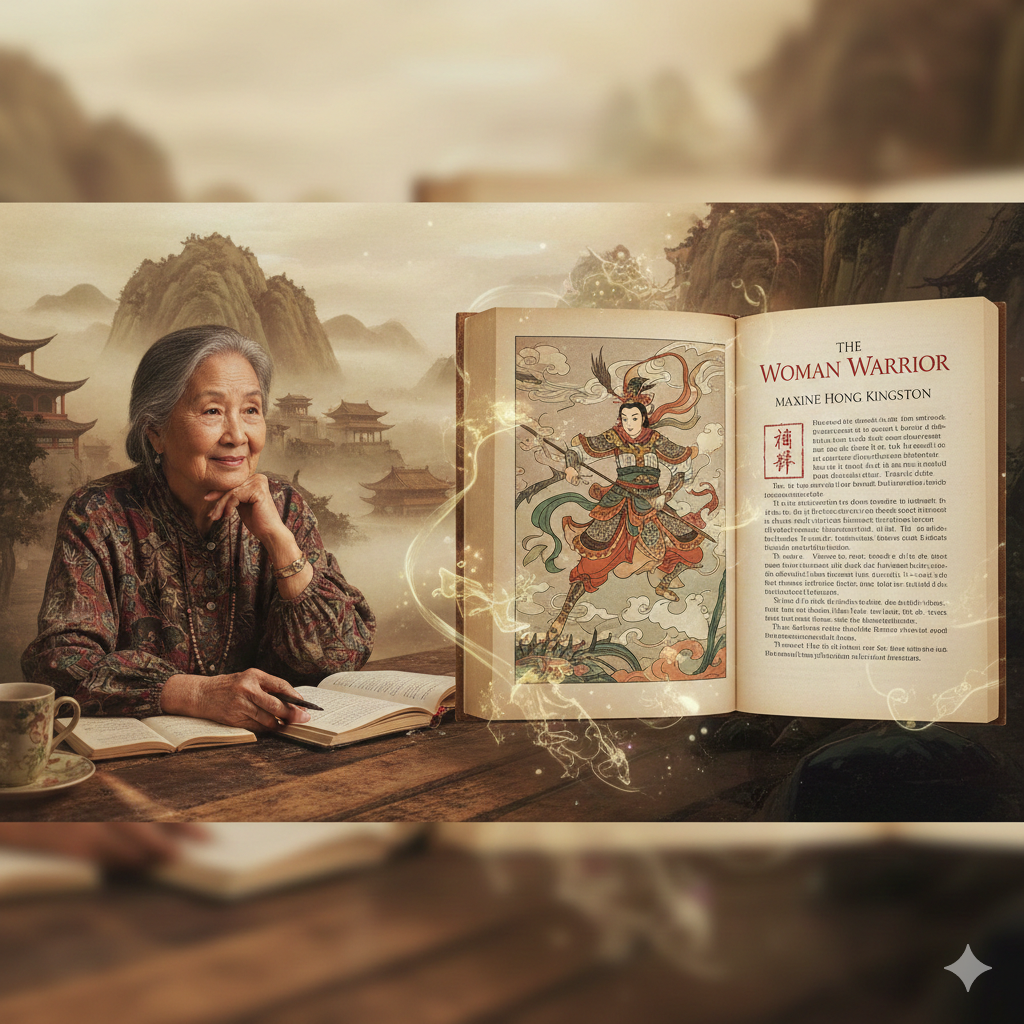
25. Maxine Hong Kingston
In The Woman Warrior, Kingston blended autobiography with Chinese mythology to explore the identity of a first-generation Chinese-American girl. The book addresses the “ghosts” of the past and the cultural expectations placed on women in both China and the United States.
Contemporary Essayists and Critics
26. Roxane Gay
Gay’s collection Bad Feminist became a cultural touchstone by acknowledging that one can be a feminist while still enjoying “problematic” aspects of culture. Her memoir Hunger is a raw, honest exploration of body image, trauma, and the space women are allowed to occupy in the world.
27. Rebecca Solnit
Solnit is the author of Men Explain Things to Me, the book that gave rise to the term “mansplaining.” Her work often focuses on the way women’s voices are silenced or discredited in public and private spaces. She is also a noted historian and environmental activist.
28. Naomi Wolf
In 1990, Wolf published The Beauty Myth, which argued that as women gained more legal and professional rights, the pressure to adhere to unrealistic beauty standards increased as a way to keep them under control. Though controversial, it remains a landmark text on the relationship between feminism and the cosmetic industry.
29. Judith Butler
A philosopher and gender theorist, Butler’s Gender Trouble (1990) introduced the idea of “gender performativity.” She argued that gender is not something we are, but something we do through repeated actions. Her work has been instrumental in the development of queer theory and third-wave feminism.
30. Carol Gilligan
A psychologist whose work challenged the male-centric models of moral development, Gilligan published In a Different Voice in 1982. She argued that women often approach ethics through a “logic of care” and relationships, rather than just abstract rules and justice.
Intersectionality and Identity
31. Kimberlé Crenshaw
While primarily a legal scholar, Crenshaw’s writing introduced the concept of “Intersectionality” to the world. Her work, such as the essay “Mapping the Margins,” explains how different forms of discrimination (race, gender, class) overlap and create unique experiences of oppression.
32. Mikki Kendall
Kendall’s Hood Feminism: Notes from the Women That a Movement Forgot is a vital contemporary critique of mainstream feminism. She argues that the movement often focuses on the problems of middle-class white women while ignoring basic survival issues like hunger, housing, and gun violence that affect marginalised women.
33. Leslie Feinberg
A pioneer in transgender rights and butch-femme culture, Feinberg’s novel Stone Butch Blues is a foundational text for understanding the intersection of feminism and gender identity. Feinberg’s work, including Transgender Warriors, puts her in the list of best feminist writers as she reclaimed the history of gender-nonconforming people.
34. Gloria Anzaldúa
A Chicana scholar and poet, Anzaldúa’s Borderlands/La Frontera: The New Mestiza explored the psychological and cultural borders of identity. She wrote about the “Mestiza consciousness” as a way to transcend binary thinking, including the binaries of gender and nationality.
35. Janet Mock
As a prominent trans rights activist, Mock’s memoir Redefining Realness and its follow-up Surpassing Certainty provide a powerful modern perspective on growing up trans, poor, and multiracial. Her work emphasizes that feminism must include all women, regardless of their path to womanhood.
Literary Powerhouses
36. Doris Lessing
A Nobel Prize winner, Lessing’s The Golden Notebook (1962) is often called a “feminist bible,” though she sometimes resisted the label. The novel uses a complex structure of notebooks to explore the mental and emotional fragmentation of a modern woman trying to live an independent life.
37. Angela Carter
Carter is known for her subversive, dark, and often erotic retellings of fairy tales. In The Bloody Chamber, she takes traditional stories like Bluebeard and Little Red Riding Hood and gets her in the list of best feminist writers as she reinvents them with female agency and desire at the center.
38. Maya Angelou
Angelou’s series of seven autobiographies, beginning with I Know Why the Caged Bird Sings, chronicles her journey through trauma, racism, and motherhood to become a world-renowned poet and activist. Her poem “Phenomenal Woman” remains an anthem of self-love and feminist pride.
39. Jeanette Winterson
Winterson burst onto the scene with Oranges Are Not the Only Fruit, a semi-autobiographical novel about a girl growing up in a Pentecostal community who realises she is a lesbian. Her work often explores the fluidity of gender and the power of storytelling which got her quickly to the top in the list of best feminist writers.
40. Louisa May Alcott
While often categorised as “children’s literature,” Little Women has been a formative feminist text for generations. Through the character of Jo March, Alcott presented a girl who rejected traditional feminine roles in favor of a career and independence. Alcott’s own life as a suffragist and worker informed the radical heart of her books.
The New Wave of Influence
41. Bernardine Evaristo
Evaristo made history as the first Black woman to win the Booker Prize for Girl, Woman, Other. The novel follows twelve different characters—mostly Black British women—across generations, capturing the vast diversity of the female experience in the UK today. Easily in the best feminist authors list.
42. Maggie Nelson
Nelson’s The Argonauts is a “genre-bending” work that combines memoir with philosophy. It explores her relationship with a gender-fluid partner and her own experience of pregnancy, offering a profound look at the “queer” potential of the nuclear family and the limits of identity labels.
43. Elena Ferrante
The pseudonymous Italian author of the Neapolitan Novels (starting with My Brilliant Friend) has captivated the world with her intense portrayal of female friendship. Sure to be found in any feminist bookshop her books explore the ways women support, compete with, and define one another within a violent, patriarchal society.
44. Caitlin Moran
Moran brought a comedic, working-class voice to modern feminism with How to Be a Woman. Part memoir and part manifesto, she addresses everything from high heels to abortion with humor and “common-sense” logic, making feminism feel urgent and accessible to a new generation.
45. Chanel Miller
Miller reclaimed her identity in her memoir Know My Name, after being known only as “Emily Doe” in the high-profile Stanford sexual assault case. Her writing is a powerful indictment of the legal system and a testament to the resilience of women survivors.
Essential Modern Thinkers
46. Sara Ahmed
A scholar of race and gender, Ahmed’s Living a Feminist Life describes how feminism is not just a theory but a way of moving through the world. She introduced the concept of the “Feminist Killjoy”—the person who points out sexism and, in doing so, is blamed for “ruining the mood.”
47. Florence Given
Representing a younger, “Gen Z” wave of feminism, Given’s Women Don’t Owe You Pretty uses vibrant illustrations and blunt prose to challenge the “male gaze” and social media standards. Her work focuses on self-love and the deconstruction of patriarchal beauty ideals.
48. Mona Eltahawy
A journalist and activist, Eltahawy’s Headscarves and Hymens: Why the Middle East Needs a Sexual Revolution and The Seven Necessary Sins for Women and Girls are fierce calls for women to be “angry, ambitious, and unruly” in the face of global patriarchy.
49. Mary Beard
The world’s most famous classicist, Beard published Women & Power: A Manifesto in 2017. She traces the history of silencing women—from Homer’s Odyssey to modern-day Twitter trolls—showing how the very concept of “power” has been constructed as a male attribute.
50. Malala Yousafzai
The youngest Nobel Prize laureate, Malala’s memoir I Am Malala tells the story of her fight for girls’ education under the Taliban. Her writing and activism have made her a global symbol for the right of every girl to learn and lead, proving that the pen is indeed mightier than the sword.
These 50 authors represent just a fraction of the vast, diverse history of feminist writing. From 15th-century courts to modern-day social media, their voices continue to challenge, inspire, and demand a more equitable world.